


High-protein ice cream enriched with paraprobiotics is an innovative functional food that increases satiety, supports muscle growth, and improves metabolism. However, the lactose, fat, and protein content of traditional ice creams can pose challenges for people with lactose intolerance, milk protein allergies, or dietary restrictions. Many dairy products do not provide suitable conditions for the survival of probiotics; however, paraprobiotics, heat-inactivated microbial cells, are more stable during processing, do not require a cold chain, and offer greater safety, especially for individuals with weakened immune systems. Clinical studies show that incorporating paraprobiotics into dairy products can improve sleep quality, reduce stress, protect the intestinal barrier, and increase beneficial gut bacteria. Their use in nondairy foods and supplements is also increasing, as they remain stable under various conditions and do not face the storage challenges associated with live probiotics. Research indicates that consuming beverages or supplements containing paraprobiotics can strengthen immune responses, reduce inflammation, improve digestion, and even positively influence mood and stress symptoms. Combining paraprobiotics with high-protein ice cream not only creates a healthy and enjoyable dessert but also supports the management of obesity, diabetes, and cardiovascular diseases by promoting healthier dietary habits. This innovation results in a nutritious ice cream suitable for athletes and health-conscious consumers. The article reviews paraprobiotic production technologies, high-protein ice cream formulation, and the benefits of incorporating paraprobiotics, showing how an ordinary food can be transformed into a functional, health-promoting product.
Methods for the production of paraprobiotics
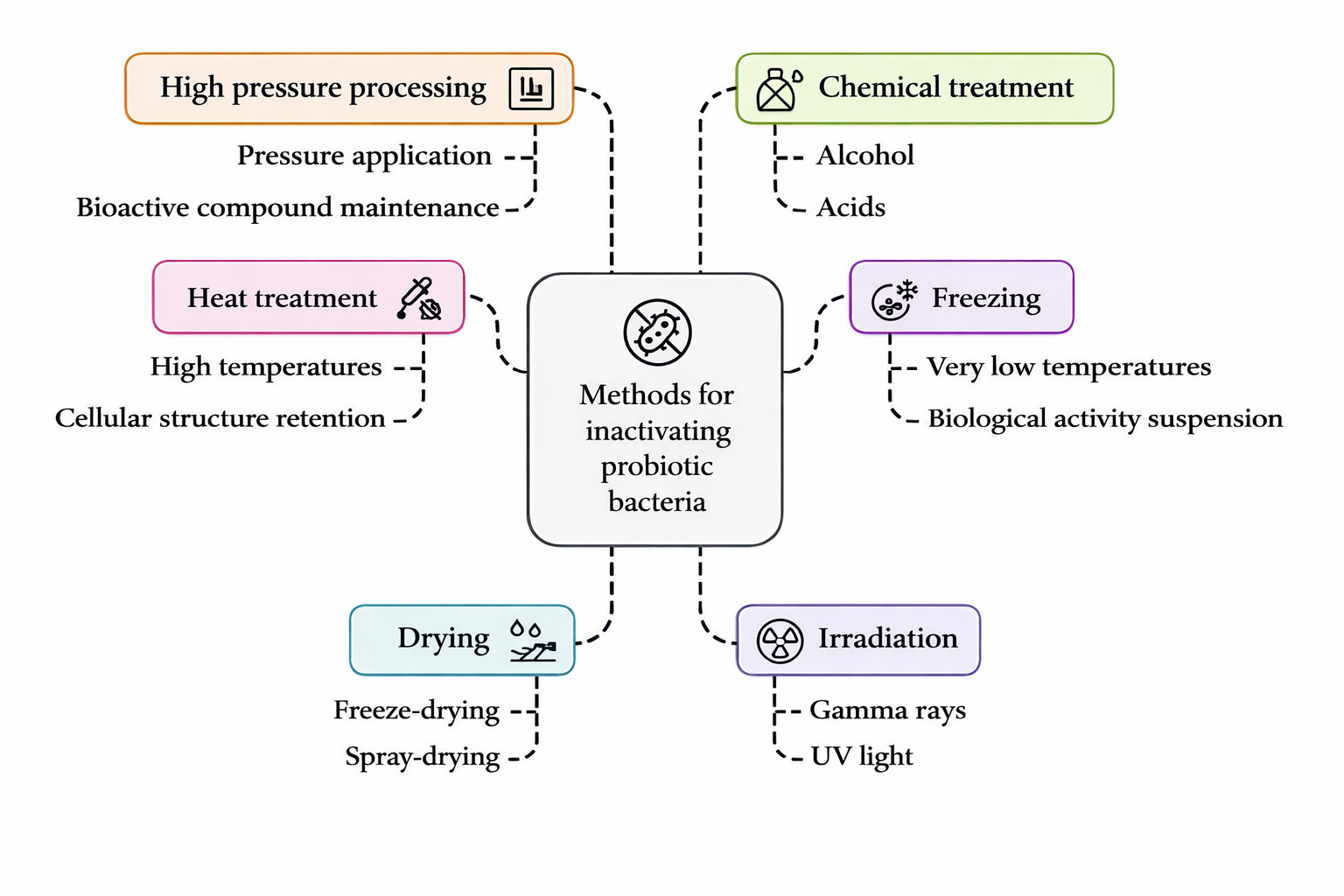
Paraprobiotics have been previously mentioned in literature as “inactivated probiotics” and “ghost probiotics”. Paraprobiotics are non-viable cells of microbes, which could be intact or broken and/or crude extracts of cells, and could produce a positive effect on the consumer when administered in sufficient amounts. Isolation plays an important role in understanding the health benefits of paraprobiotics as well as their mode of action. A variety of methods are used for isolation, including cell disruption techniques, heat treatment, freezing, drying, irradiation with gamma rays or UV light, high-pressure processing (HPP), and chemical treatments. Further isolation and purification methods must be properly selected to match the specific properties of the molecules under study. The methods by which these components are isolated determine their health benefits. It is emphasized that the selection of appropriate inactivation methods and conditions will be crucial for the effectiveness of paraprobiotics.
Effect of Paraprobiotics on Formulation of Functional Foods
The role of paraprobiotics in the formulation of functional foods such as high-protein ice creams has received attention in recent years, as these compounds have important health benefits and technological advantages.
Health benefits
Paraprobiotics obtained from B. velezensis GV1 have been shown to improve immune responses and the composition of the intestinal microbiota. They increase beneficial bacteria and reduce harmful bacteria. These compounds release bioactive substances such as exopolysaccharides (EPS) and peptidoglycans (PGN) that have health benefits. Research on the effects of paraprobiotics, especially their PGN components, has shown significant benefits in intestinal function and disease treatment. PGN, which is part of the bacterial cell wall, has a strong effect on stimulating the immune system even when the cell is inactive. Paraprobiotics are also effective in improving the strength of tight junctions, thereby strengthening the intestinal barrier and reducing intestinal permeability, a key factor in diseases such as “leaky gut.” In addition, the anti-inflammatory properties of PGN can reduce the severity of chronic intestinal inflammation and help treat diseases such as colitis and gastrointestinal infections.
Technological advantages
Paraprobiotics have significant technological advantages over live probiotics, especially in high-protein ice cream formulations. They can be added to the product without concern for viability during processing, storage, and distribution.
While live probiotics are sensitive to heat, high pressure, and acidic conditions, paraprobiotics are resistant to these conditions and maintain their functional properties at high temperatures, high pressure, low pH, and long storage times. This broad stability has expanded their application range from traditional foods and beverages to functional foods, as they do not require a cold chain and sensitive storage, unlike live bacteria. In addition, paraprobiotics increase the functional value of food products by providing health benefits such as improved immunity and gut health, similar to live probiotics but with greater stability. Live probiotics, if consumed in inappropriate amounts, may cause problems such as bacterial overgrowth or reduced survival in industrial processes. In contrast, the non-viable nature of paraprobiotics and their flexibility provide an excellent opportunity for manufacturers to produce functional foods with health benefits such as immune system enhancement and improved gut health that can be easily incorporated into consumers’ diets. Importantly, paraprobiotics enhance the functional properties of food products through bioactive compounds such as PGN and EPS, rather than through increased nutrients such as protein and vitamins. In addition to improving gut health and immune function, paraprobiotics can be combined with high-protein formulations, including innovative products such as ice cream, to provide additional functional health benefits and meet diverse nutritional needs.
Importance of High-Protein Ice Cream
In recent years, high-protein ice creams have gained popularity due to the important role of protein in growth, tissue repair, and improved body function. These products, which usually contain 15 to 18 percent protein, are considered a healthier option for athletes and even diabetics, especially when natural sweeteners and low-sugar formulations are used. Various protein sources, such as whey (WPI & WPC), milk protein (MPC & MCC), and even plant-based sources, such as soy and pea protein, are used in the production of these ice creams, and each has a different effect on the nutritional value, texture, melting stability, and taste of the product. Among them, dairy proteins usually provide better texture and flavor, while plant-based varieties are more suitable for people with milk allergies and special diets. Despite the significant benefits, the main challenge in producing high-protein ice creams is maintaining the desired taste and texture while increasing the protein content. Studies have shown that the right combination of proteins, including the use of optimal concentrations of plant proteins or pulse proteins (PPC) – derived from red gram- can increase nutritional value and still provide good sensory acceptance. Also, the use of functional ingredients such as paraprobiotics, in addition to improving health and the immune system, helps to increase the attractiveness of these ice creams for consumers. In summary, intelligent selection of protein source and proper formulation design are the keys to producing high-protein ice cream with high nutritional value and good sensory quality.
Conclusions
Incorporating paraprobiotics into high-protein ice cream formulations is a revolutionary approach to producing functional foods that combine sensory pleasure with health benefits such as improved gut health and immune modulation. Unlike live probiotics, paraprobiotics exhibit better stability during freezing and long-term storage and maintain functional properties such as texture, viscosity, and emulsion stability, making them ideal for frozen desserts, where it is technically challenging to maintain the viability of live probiotics. Whey protein isolate (WPI), which is valued for its high protein purity, excellent solubility, texture improvement, and nutritional benefits such as muscle recovery and satiety, and MPC, which provides casein and whey proteins for structural stability and increased nutritional value, are optimal options for these formulations. This review highlights the potential of high-protein ice cream containing paraprobiotics as an innovative functional food and highlights opportunities for further research to optimize formulations, enhance sensory properties, and meet market needs.
Reference:
, , , and , Functional Ice Cream: Health Benefits and Sensory Implications, Food Research International. (2022) 161, 111858, https://doi.org/10.1016/j.foodres.2022.111858, 36192980.